
Sleep as a wellness foundation: duration, regularity, breathing

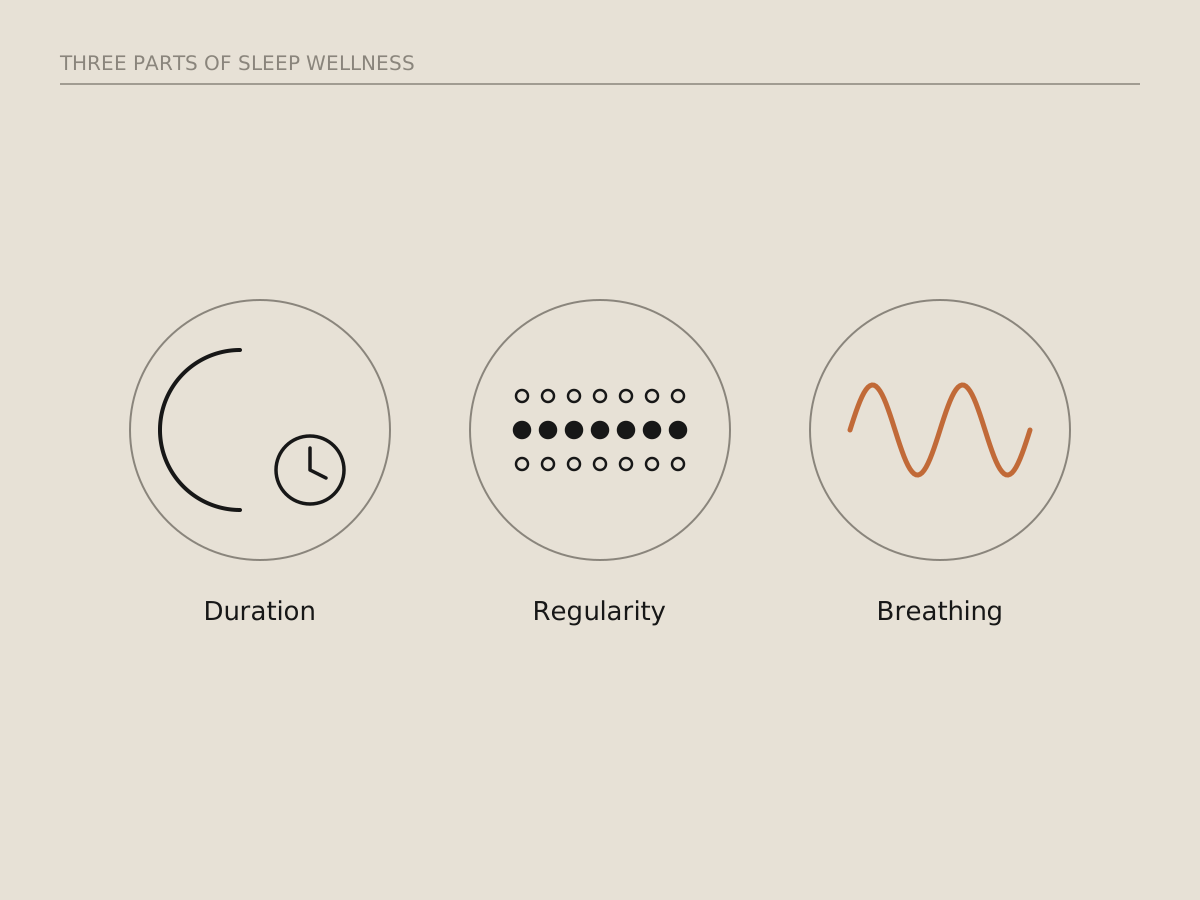
Sleep wellness comes down to 3 things you can measure without a clinic: how long you sleep, how regular your schedule is, and how well you breathe once you're asleep. The first two are well known. The third is the one almost nobody measures, and it's the one where the throat, the nose, snoring, and the whole upper airway come in. Get all three moving in the right direction and most of the rest of wellness (energy, mood, appetite, recovery from exercise, blood pressure) gets easier.
We'll take the three in order and spend the most time on the third.
What does "sleep wellness" mean?
Sleep that leaves you restored, on a schedule your body can predict, with breathing that stays quiet and steady through the night. In practice that means most nights land in the 7 to 9 hour range the American Heart Association added to its cardiovascular health checklist in 2022, bed and wake times stay within about an hour day to day, and the night isn't spent snoring or working to pull air through a narrowed throat.
Wellness is a lane. Everything on this page is about noticing your own patterns and changing habits. When a pattern points at a medical problem, the answer is a clinician and a sleep study, and we'll say so.
Why does sleep duration matter?
Because too little sleep is associated with worse outcomes across nearly every system studied, and pooled prospective research links short sleep to about 12% higher all-cause mortality. Too much sleep is associated with worse outcomes too, though that's usually read as a sign of illness rather than a cause. Sleep, breathing, and longevity walks through the evidence and its limits.
The practical target for most adults is 7 to 9 hours in bed with the lights off, most nights.
Why does sleep regularity matter?
Because the body runs on a clock, and every system from digestion to hormone release to deep-sleep timing schedules itself around when it expects you to sleep. A 2024 study of 60,977 people found a consistent sleep schedule predicted mortality better than sleep duration did. Consistent timing also puts your deepest sleep, where breathing is steadiest, in the same place every night.
The practical target: same bedtime and wake time within an hour, weekends included, plus morning light and daytime movement to anchor the clock.
Why does breathing matter, and why does nobody measure it?
Because you're unconscious while it happens. You can count hours with a clock and regularity with a calendar. Breathing you can't see.
Yet it's the mechanism by which the night reaches the body. The upper airway, the soft passage from nose to voice box, is the only part of the breathing path that can collapse, and in sleep its muscles relax. When it narrows, breathing gets effortful and uneven; when tissue flutters, that's snoring; when it closes, that's apnea. Objective snoring time tracks with higher blood pressure in large samples, and untreated sleep apnea tracks with higher mortality in long cohorts. Understanding your upper airway explains the passage. Breathing regularity during sleep explains the steadiness measure.
The practical targets: breathe through your nose, sleep on your side if your back is loud, keep alcohol 3 or 4 hours from bed, and find out how much of the night you spend snoring.
What is snoring, really?
Soft tissue vibrating in a narrowed airway. It's common (roughly a quarter of men and one in 8 women snore habitually), it's under-reported (most people don't know how much they do it), and it varies enormously night to night with position, alcohol, congestion, and exhaustion.
Four articles cover it from different angles. The anatomy of snoring names the parts. How snoring works explains the physics. What causes the sound of snoring explains why yours sounds the way it does. What snoring can mean covers when to pay attention.
The measure that ties them together is snore burden: how much of the night was spent snoring, not just whether it happened.
How do I measure my own nights?
Hours and regularity: a notebook, a phone's sleep log, or any wearable.
Breathing and snoring: a microphone on the nightstand or a sensor under the mattress, run for at least 2 weeks so the good nights and bad nights average out. How to track and monitor your snoring compares the options.
Nightsong is the app we built for the breathing part. It listens from the nightstand, keeps the raw night audio on your phone, and reports snore burden and breathing regularity across your own nights. Those two feed the Somnus Index, a single general-wellness number that tracks your trend against your own baseline, you vs you. If a night wasn't heard, there's no Index for it. It's a general-wellness product, not a medical device, and it doesn't diagnose anything. Nightsong has the details.
When does wellness stop and medicine start?
When the pattern points at a condition. Loud snoring most nights plus pauses a partner hears, gasping, waking unrefreshed, morning headaches, or dozing off in the day are the signs of sleep apnea, and they need a sleep study, not another app. Who treats sleep apnea explains the care team, and oral appliance vs CPAP compares the two commonest treatments so you walk in informed.
A good wellness record makes that conversation better. "I snore" is a complaint. "I snored 25% of the night on average for 3 weeks, worst on my back and after wine, and my mornings were rough on the loud nights" is data a clinician can act on.
What are the 5 habits that move all three?
Keep a schedule. Breathe through your nose (mouth breathing vs nasal breathing covers why). Separate alcohol from bed by a few hours. Sleep on your side if your back is loud. Get morning light and move during the day.
None of them is new. What's new is being able to see whether they worked, in your own numbers, over your own weeks.
That's the idea we built Somnus on: sense the night as it was, score you against yourself, and connect the pattern to people who can act on it. Sensing is the first step of the Somnus platform.
This article is educational and not medical advice. Talk to a qualified clinician about your situation.
FAQ
What are the main parts of sleep wellness?
Three: how long you sleep (7 to 9 hours for most adults), how regular your schedule is (within about an hour day to day), and how well you breathe during sleep (quiet, steady, nasal). The third is the one most people never measure.
Is 7 hours of sleep enough?
For many adults, yes; 7 to 9 hours is the range associated with the best outcomes in population research and the range the American Heart Association recommends. Individual needs vary.
Why is a consistent sleep schedule important?
A 2024 study of 60,977 people found sleep regularity predicted mortality better than sleep duration. Consistent timing also puts deep sleep, where breathing is steadiest, in the same place every night.
How does snoring affect wellness?
Snoring means the airway is narrowed and breathing is working harder. Time spent snoring is associated with higher blood pressure, and it fragments a partner's sleep. Measuring how much you snore, over weeks, is the useful first step.
Can a sleep app replace a sleep study?
No. Apps and wearables track patterns in the wellness lane. Diagnosing sleep apnea or any breathing disorder takes a clinician-ordered home sleep test or in-lab study.
Sources
- Lloyd-Jones DM, et al. Life's Essential 8. Circulation 2022.
- Cappuccio FP, et al. Sleep duration and all-cause mortality: a systematic review and meta-analysis. SLEEP 2010.
- Windred DP, et al. Sleep regularity is a stronger predictor of mortality risk than sleep duration. SLEEP 2024.
- Lechat B, et al. Regular snoring is associated with uncontrolled hypertension. npj Digital Medicine 2024.
- Young T, et al. Sleep disordered breathing and mortality: eighteen-year follow-up of the Wisconsin Sleep Cohort. SLEEP 2008.
- The prevalence of snoring in adult population (survey of 5,713 US adults).