
Breathing regularity during sleep: what it is and why it matters
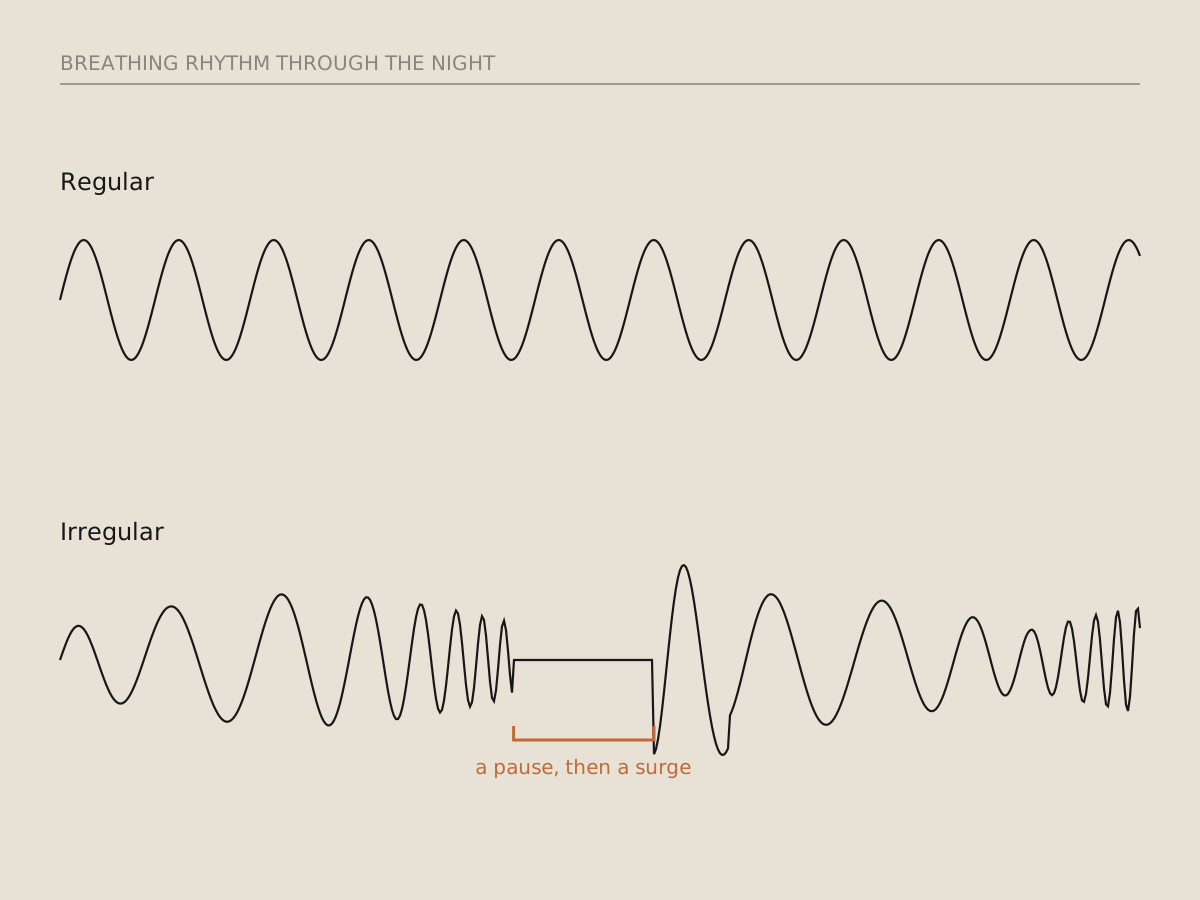
Breathing regularity is how steady the rhythm of your breathing stays through the night. A regular pattern has even spacing between breaths, even depth, and no long pauses or runs of effortful breathing. An irregular pattern bunches, shrinks, stops, and surges. Most healthy adults breathe 12 to 20 times a minute in sleep (our own nights sit around 16), and in deep sleep the rhythm is about as regular as it ever gets.
That regularity is a useful wellness signal because most of the things that disturb it, from a narrowed airway to a blocked nose to alcohol, are things you can notice and change.
What does regular breathing look like?
In light and deep (non-REM) sleep, breathing runs on autopilot. The brain's breathing centers respond to carbon dioxide and oxygen in the blood and set a slow, steady rhythm, typically a little slower and shallower than when you're awake. Watch a sleeping person in deep sleep and the chest rises and falls like a metronome.
REM sleep is different, and this matters for reading any breathing record. In REM the breathing centers take input from the dreaming brain, and the rhythm becomes faster and more variable, with short pauses and irregular depth. That's normal. Some irregularity across a night is expected, and a record with zero variation would be the odd one.
What makes breathing irregular at night?
The commonest cause is the airway. When the throat narrows in sleep, each breath takes more effort to pull the same air through. Breathing gets louder, then uneven, then may stall for a few seconds and restart with a bigger breath. Snoring is often the audible version of this. Understanding your upper airway explains why the throat narrows; what snoring can mean covers the sound side.
Other causes are ordinary. A blocked nose forces mouth breathing, which is shallower and less steady. Alcohol and sedatives relax the airway and blunt the breathing reflexes. Being overtired deepens sleep and lowers muscle tone. Heartburn, a late heavy meal, or anxiety can all break the rhythm. So can sleeping on your back.
And some causes need a clinician: sleep apnea, where breathing pauses repeatedly because the airway closes; certain heart and lung conditions; and some medications. Those are diagnosed with a sleep study, never from a wellness record.
How is breathing regularity measured?
Clinically, with airflow sensors at the nose and mouth, bands around the chest and abdomen, and an oxygen probe on the finger, all read together by a sleep specialist. That's what a home sleep test or an in-lab study does, and it's the only way to diagnose a breathing disorder.
At home, from sound or vibration. A microphone on the nightstand picks up the rhythm of breathing and snoring; an under-mattress sensor picks up the rise and fall of the chest through the bed. Software finds the breaths and looks at how evenly they're spaced and how often the rhythm breaks. Nightsong, the app we built, does this from a phone on the nightstand, with the raw audio staying on the phone. It reports breathing regularity alongside snore burden, and the two feed the Somnus Index, a general-wellness number that tracks your nights against your own baseline. If a night wasn't heard, there's no Index for it. It measures steadiness of rhythm; it doesn't measure oxygen, doesn't count apneas, and isn't a diagnosis.
Why does breathing regularity matter?
For the night itself: irregular breathing usually means the body is working harder than it should to move air, and the brief arousals that restart a stalled breath fragment sleep even when you don't remember waking. People with irregular nights tend to report unrefreshing mornings, dry mouth, and headaches.
For the longer view: nighttime breathing is the mechanism by which airway problems reach the rest of the body. Repeated dips in airflow stress the cardiovascular system, and objective snoring time tracks with higher odds of uncontrolled blood pressure in large population samples. Those are associations from research, not something any wellness app tells you about yourself. Sleep, breathing, and longevity goes through the evidence at the population level.
What's the difference between breathing regularity and sleep regularity?
They're different things and both matter. Sleep regularity is whether you go to bed and wake at consistent times day to day. Breathing regularity is whether the rhythm of your breathing stays steady inside a night. Recent large studies have found sleep regularity to be a strong predictor of long-term health, and a consistent schedule is one of the simplest things you can change. Breathing regularity is about what happens once you're asleep.
How can I make my breathing more regular at night?
Breathe through your nose. Treat congestion, and if the nose is the bottleneck, try a strip or dilator. Mouth breathing vs nasal breathing covers why the route matters.
Sleep on your side. Leave 3 or 4 hours between the last drink and bed. Finish big meals early. Keep a consistent schedule, so the deep-sleep stretch where breathing is most regular comes on time.
Then watch for 2 weeks. If the rhythm is regular most nights and rough after wine or with a cold, you've learned something you can act on. If it's rough most nights, or a partner hears pauses and gasps, bring the pattern to a qualified clinician and ask about a sleep study.
Nightsong is one way to build that 2-week record. It's the sensing step of the Somnus platform and sits inside sleep as a wellness foundation.
This article is educational and not medical advice. Talk to a qualified clinician about your situation.
FAQ
What is breathing regularity?
How steady the rhythm of breathing stays through the night: even spacing between breaths, even depth, and no long pauses or runs of effortful breathing. It's a general-wellness signal, not a clinical score.
What is a normal breathing rate during sleep?
Roughly 12 to 20 breaths a minute for most healthy adults, usually a little slower than when awake. The rhythm is most regular in deep sleep and naturally more variable in REM.
Is irregular breathing during sleep normal?
Some is. REM sleep produces short pauses and uneven depth in everyone. Frequent long pauses, gasping, or a rhythm that's rough most nights are worth raising with a clinician.
What causes irregular breathing at night?
A narrowed airway is the commonest cause, along with a blocked nose, alcohol, sedatives, back sleeping, and late heavy meals. Sleep apnea and some heart, lung, and medication effects also cause it and need a clinician to diagnose.
Can a phone measure breathing regularity?
A phone on the nightstand can pick up the rhythm of breathing and snoring from sound and report how steady it was. It can't measure oxygen or count apneas, and it isn't a diagnosis.
Sources
- Sowho M, Amatoury J, Kirkness JP, Patil SP. Sleep and respiratory physiology in adults. Clin Chest Med 2014;35:469-481.
- Lechat B, et al. Regular snoring is associated with uncontrolled hypertension. npj Digital Medicine 2024;7:38.
- Windred DP, et al. Sleep regularity is a stronger predictor of mortality risk than sleep duration: a prospective cohort study. SLEEP 2024;47(1).
- Lundberg JO. Nitric oxide and the paranasal sinuses. The Anatomical Record 2008.
- Pevernagie D, Aarts RM, De Meyer M. The acoustics of snoring. Sleep Medicine Reviews 2010.